
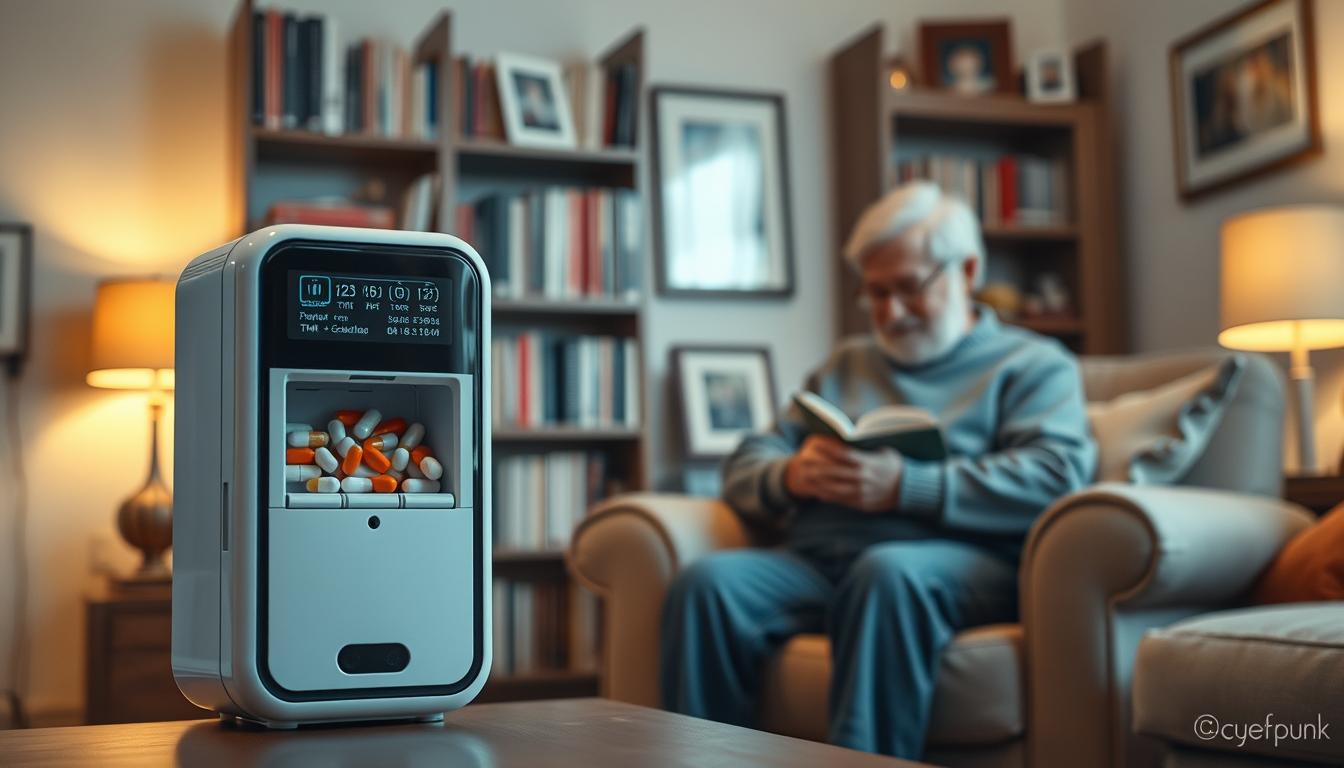
Automatic Medication Dispensers That Help Seniors Avoid Missed Doses
Managing your daily prescriptions is a critical part of maintaining your well-being. Yet, errors with these routines pose a significant health risk, contributing to thousands of preventable deaths annually.
This challenge becomes more complex when you are managing two or more chronic conditions. This situation affects a vast majority of individuals aged 60 and older, making it difficult to keep track of multiple pills.
The most common mistakes include taking an incorrect amount, missing a dose entirely, or taking the wrong medicine at the wrong time. Understanding these medication errors is the first step toward prevention.
Modern pill organizers have evolved into sophisticated tools. Today’s automated systems provide structure and reminders, offering peace of mind for you and your loved ones.
Key Takeaways
- Mistakes with prescriptions are a serious health concern, leading to numerous preventable issues each year.
- Managing multiple chronic conditions makes sticking to a correct schedule increasingly difficult.
- The most frequent errors involve incorrect dosing, missed doses, and taking the wrong pill.
- Advanced pill dispensers use technology to overcome challenges with memory and physical dexterity.
- Automated systems provide reliable reminders and structure, enhancing safety and independence.
- Proper management is crucial to avoid adverse reactions and hospitalizations.
- This guide will help you understand how these devices work and how to choose the right one for your needs.
Understanding Automatic Medication Dispensers
An automatic pill dispenser is more than just a container; it’s a smart system designed to deliver your prescriptions with precision. These devices represent a significant upgrade from basic weekly organizers.
How These Devices Work
Your automated system stores pre-loaded doses in secure compartments. These compartments unlock only at the specific times you program.
This process prevents accidental double-dosing or taking pills too early. The device automatically releases the correct combination of pills, eliminating guesswork.
Some models offer both a fixed schedule and on-demand dispensing with a button press. This flexibility is helpful if your timing needs to change.
The Evolution from Manual to Automated Systems
The shift from manual organizers to automated units addresses key challenges. If you have difficulty with small bottles, the physical design helps.
For complex schedules, the technology provides crucial cognitive support. Modern units often use a rotating carousel to hold different pills separately.
Connectivity features allow the system to share your adherence patterns with caregivers. This integration offers a new level of oversight and safety for your health routine.
Why the Right Pill Dispenser Matters
Finding the right prescription administration device can significantly impact your daily wellness management. The correct choice supports your treatment plan and reduces potential complications.
Enhancing Medication Adherence
Your consistency with prescribed regimens directly affects treatment outcomes. Proper adherence ensures you receive the full benefits of your pharmaceutical routine.
Memory challenges affect many individuals, making complex schedules difficult to follow. A reliable system removes the burden of remembering multiple daily doses.
Preventing Medication Errors
Mistakes with prescriptions pose serious health concerns. Dosing errors rank as the most frequently reported issue.
Choosing incorrect tablets or missing scheduled times can lead to adverse reactions. A structured approach minimizes these risks effectively.
| Common Error Type | Potential Consequences | Prevention Strategy |
|---|---|---|
| Incorrect Dosage | Under-treatment or toxicity | Pre-measured compartments |
| Missed Doses | Treatment gaps and reduced efficacy | Automated reminders |
| Wrong Medication | Adverse drug interactions | Clear labeling and separation |
| Timing Mistakes | Reduced absorption or side effects | Scheduled release mechanisms |
The way you organize your pharmaceutical routine influences your overall wellness. Selecting an appropriate device provides structure and confidence in your daily health management.
Easy Medication Dispenser Seniors: Features to Consider
Key characteristics separate a basic container from a truly supportive health management tool. Focusing on the right functionalities ensures the system integrates smoothly into your life.
Smart Reminders and Alerts
Your device should get your attention effectively. Look for multiple alert options like audible alarms, bright lights, or gentle vibrations.
This variety helps if your hearing or vision is not as sharp. Consistent notifications are vital for maintaining your schedule.
| Alert Type | Best For | Key Advantage |
|---|---|---|
| Audible Alarm | General awareness | Loud, clear sound signal |
| Flashing Light | Hearing impairment | Highly visible visual cue |
| Vibration | Discreet notification | Ideal for private settings |
| Digital Notification | Tech-savvy users | Remote alerts via app |
Capacity, Customization, and Secure Dispensing
Consider how many prescriptions you take and how often. Some units hold a full three-month supply, while others need weekly refills.
Choose a capacity that matches your regimen and caregiver support. Customization allows you to program multiple doses at different times.
The locking mechanism is a critical safety feature. It prevents access to pills until the precise scheduled moment, reducing the risk of errors.
Your access should be simple, like a button press, but secure. This balance provides safety without adding frustration to your routine.
Product Roundup: Top Automatic Dispensers
Navigating the market for automated prescription management tools reveals several standout options. This comparison helps you evaluate the leading systems based on your specific needs and budget.
Reviewing the Hero Medication Dispenser
The Hero pill dispenser offers an attractive balance of cost and capability. Your initial investment is $99, with a $29.99 monthly subscription for a two-year plan.
This device stores a 90-day supply of up to 10 different medications. It can distribute doses up to 10 times per day.
The companion app is a key feature. It lets your caregivers track adherence and get notifications for missed or extra pills.
Highlighting Pria, MedaCube, and Philips Systems
Other excellent choices exist. The Pria system costs $299.99 upfront and $9.99 monthly. It includes 28 compartments and video calling.
MedaCube has a higher initial cost of $1,399 but no ongoing fees. It holds 90 days of medications and dispenses up to 20 times daily.
The Philips service requires no upfront payment, just a $59.95 monthly subscription. It manages up to 6 doses daily for 40 days.
Comparing Costs and Subscription Models
Understanding the financial commitment is crucial. Your choice depends on preferring lower upfront costs or avoiding monthly fees.
| System | Upfront Cost | Monthly Fee | Key Differentiator |
|---|---|---|---|
| Hero | $99 | $29.99 | Best overall value & app features |
| Pria | $299.99 | $9.99 | Integrated video calling |
| MedaCube | $1,399 | $0 | No subscription, high capacity |
| Philips | $0 | $59.95 | Rental-style model |
This monitoring helps provide peace of mind for older adults and their caregivers. Compare these models to find your ideal fit.
Benefits for Seniors and Caregivers
Automated pharmaceutical administration offers dual benefits that enhance safety and reduce stress for everyone involved. These systems provide meaningful advantages for both the person using them and their support network.
Fostering Independence at Home
You gain significant freedom when managing your health routine confidently. The system handles timing and dosage automatically.
This approach preserves your autonomy while ensuring proper adherence. You maintain control over your daily schedule without constant supervision.
Remote Monitoring and Peace of Mind
Your family members receive valuable insights through monitoring features. They can track adherence patterns from any location.
This oversight provides reassurance without intrusive checking. Alerts only notify them when attention is truly needed.
Both parties benefit from this balanced approach to care coordination. The technology creates a supportive partnership that enhances safety for older adults.
Improving Medication Adherence with Automation
Clinical evidence from 2024 confirms a significant breakthrough in supporting daily wellness routines. A scientific study found that thoughtfully designed pill organizers significantly help individuals take their prescriptions correctly.
These successful systems feature clear interfaces and customizable alert options. Their development involved input from patients, caregivers, and healthcare providers.
Reducing Missed Doses and Dosage Errors
You can dramatically improve your medication adherence through automation. These devices eliminate the most common problems: forgetting a dose and confusion about the correct amount.
The system never forgets and delivers your pills at the right time every day. This systematic approach is clinically proven to boost adherence rates.
Better adherence translates directly into improved management of chronic conditions. You achieve better health outcomes from taking your prescriptions more consistently.
Dosage errors are reduced because the automatic unit pre-measures each dose exactly as prescribed. This removes the risk of taking too many or too few pills.
You also benefit from a major reduction in stress. Knowing a reliable system manages this critical task provides immense peace of mind.
Tips for Choosing the Right Dispenser
Your decision-making process for an automated pill administration system should focus on practical needs and long-term value. The right choice depends on your specific pharmaceutical routine and support requirements.
Evaluating Features and Ease of Use
Start by identifying which features matter most for your situation. Consider durability, reliability, and customization options.
The user-friendliness of your chosen device directly impacts consistent use. Look for intuitive interfaces with large buttons and clear displays.
Reliable dispensers should withstand accidental drops and maintain consistent performance. Tamper-proof mechanisms provide essential safety for your medications.
Understanding Pricing and Subscription Options
Basic automatic pill dispensers start around $75-$99. Mid-range models average $400, while high-tech systems can reach $1,400-$2,000.
Subscription services typically range from $29.99 to $99.99 monthly. These may include monitoring, refill coordination, and technical support.
Consider total ownership costs over time. A higher upfront investment might prove more economical than ongoing monthly fees for long-term use.
| Selection Criteria | Basic Models | Mid-Range Options | Premium Systems |
|---|---|---|---|
| Price Range | $75-$99 | $300-$500 | $1,000-$2,000 |
| Monthly Fees | Optional | $10-$30 | $30-$100 |
| Key Features | Basic reminders | App connectivity | Video calling, auto-refills |
| Ideal For | Simple schedules | Tech-comfortable users | Complex medication needs |
Your final choice should balance immediate needs with future requirements. The ideal pill dispenser integrates smoothly into your daily routine while providing reliable schedule management.
Integrating Dispensers into Your Daily Routine
Getting started with your automated dispenser involves a simple, two-part process: initial setup and daily use. Modern systems are designed for straightforward integration into your life.
Simple Setup and Ongoing Management
The setup process is your first step. You or a caregiver will load your pills into the device. Some models use an intuitive sorting mechanism that saves time.
This initial filling can provide a supply lasting from 40 to 90 days. It depends on your specific regimen and the dispenser’s capacity.
Once set up, your daily interaction is minimal. You will hear an alarm or see a visual reminder at the correct times.
You press a button, and the system releases the precise pills for that dose. The device manages the complexity of timing and dosage for you.
Place your dispenser in a central location, like a kitchen counter. This ensures you won’t miss alerts and can easily access your medications throughout the day.
Caregivers can handle refills during regular visits. This ongoing management supports your consistency with minimal effort.
Conclusion
Modern technology offers a reliable solution for managing complex daily pharmaceutical schedules with confidence. Your investment in the right automated system provides significant peace of mind for both you and your support network.
Understanding the available features and options empowers you to make an informed choice. Systems like Hero, Pria, MedaCube, and Philips offer different approaches to meet various needs and budgets.
These advanced systems work together to ensure you receive the correct pills at the proper times. This reliable approach reduces the risk of errors and supports your overall health goals.
Choosing the right device allows you to focus on living life fully. It provides the freedom and safety needed to maintain independence while ensuring consistent pharmaceutical adherence.