
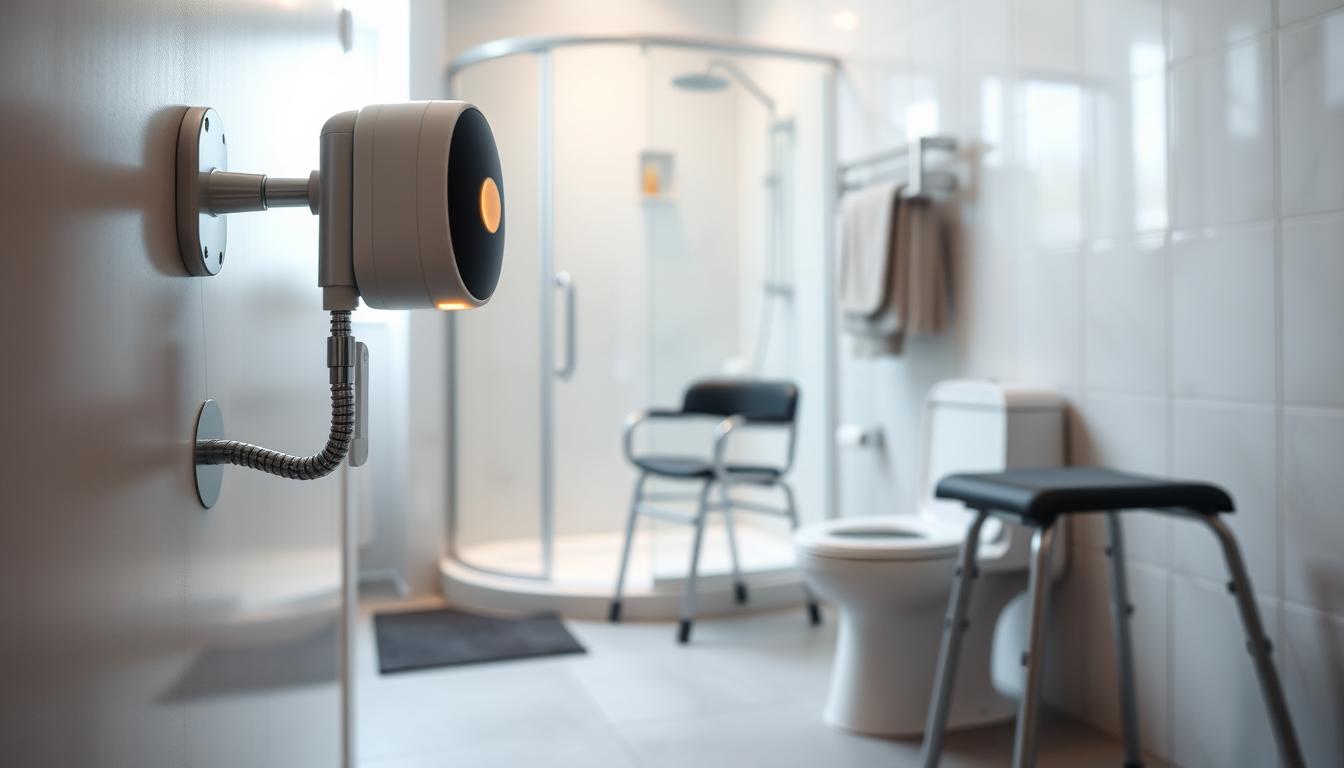
Best Bathroom Fall Sensor Setups for Seniors With Limited Mobility
Keeping your loved ones safe at home is a top priority. For older adults with limited mobility, certain areas of the house present more risks than others. The statistics are clear: one in four seniors experiences an accident each year.
Modern technology offers powerful solutions. Advanced fall detection is now a key feature in many safety devices. These systems are designed to provide peace of mind by automatically calling for help when it’s needed most.
Choosing the right medical alert systems can feel overwhelming. This guide simplifies the process. We will explore the best options to protect seniors and enhance their independence, focusing on critical safety features you should look for.
Key Takeaways
- Falls are a major health risk for older adults, with many happening at home.
- Modern fall detection technology can automatically send alerts for help.
- Medical alert systems are essential safety devices for seniors with mobility challenges.
- Choosing the right setup involves considering response time, accuracy, and ease of use.
- Proper installation can significantly increase safety and provide peace of mind for families.
Understanding Bathroom Fall Sensor Setups
Understanding how these automated safety nets function is the first step toward making an informed choice. These specialized alert systems are designed for one primary goal: to get you help automatically when you cannot call for it yourself.
What They Are and Why They Matter
This technology relies on smart sensors that constantly monitor movement. Advanced algorithms analyze data to identify a sudden, harmful event. This sophisticated fall detection is crucial for those with health challenges.
Muscle weakness and balance issues can make simple tasks risky. A quick response during an emergency is vital. The right device acts as a constant guardian, providing a critical safety net.
Benefits for Seniors With Limited Mobility
The greatest benefit is the confidence to live independently. You gain peace of mind knowing that a medical alert will be sent instantly if a problem occurs. This security can even encourage more activity around the home.
These systems protect your privacy while ensuring help is always available. They address the fear of being alone and injured. This technology empowers you to maintain your lifestyle with less worry.
Key Features to Look for in a Fall Detection System
Your choice in a safety device hinges on two critical factors: how fast it responds and how accurately it detects incidents. These performance metrics determine if help arrives in time. They are the foundation of a reliable alert system.
Performance Metrics: Response Time and Accuracy
Response time is the total duration from an incident to help being dispatched. It includes the detection itself and the connection to a monitoring center. Every second counts in an emergency.
Recent tests show significant differences between brands. Systems like HandsFree Health respond in about 28 seconds. Others may take over a minute. A time under 90 seconds is generally considered acceptable for safety.
| Brand | Average Response Time (Seconds) |
|---|---|
| HandsFree Health | 28 |
| Bay Alarm Medical | 48 |
| LifeFone | 49 |
| Medical Guardian | 52 |
| MobileHelp | 62 |
The accuracy of automatic fall detection is equally vital. A system must catch every real incident. Missing one can have serious consequences for a person’s health.
Look for technology that distinguishes true emergencies from normal movement. This prevents false alarms while ensuring genuine alerts are sent. The best options offer near-perfect detection rates for complete peace of mind.
Evaluating Medical Alert Systems with Fall Detection
The true test of any safety device comes from those who use it regularly in their homes. Customer feedback provides invaluable insights into how these medical alert systems perform beyond laboratory conditions.
User Reviews and Reliability Insights
Real users consistently highlight reliability as the most important factor. Don praised his device for working “just fine” with easy setup. Andrew Ellison found the perfect solution for his mother after a falling incident.
Many reviews emphasize the importance of continuous calling features. One user tested that alerts would call numbers until reaching a person, not an answering machine. This ensures help arrives when needed most.
Comparative Analysis of Top Brands
When comparing different brands, look for consistent performance across multiple metrics. The best alert systems excel in fall detection accuracy and response times.
Customer service quality often separates top medical alert system providers from average ones. Families appreciate options that don’t require monitored services, offering flexibility in emergency contact management.
How Bathroom Fall Sensor Setups Improve Home Safety
Independent living becomes significantly safer when reliable monitoring technology is in place. These protection solutions create multiple layers of security throughout your living space.
Real-World Test Results and Case Studies
Recent testing demonstrates impressive performance from leading brands. Medical Guardian detected every incident in controlled trials with an impressive 1,400-foot range.
Bay Alarm Medical and MobileHelp also achieved perfect detection rates. Their extended coverage ensures connectivity throughout larger homes.
GPS tracking proved accurate across various locations. This includes commercial areas and residential neighborhoods.
Enhanced Safety for Everyday Living
Your daily routine gains an extra layer of protection. Research shows these monitoring solutions actually encourage more activity around the house.
You maintain independence while knowing help is always available. Family members experience greater peace of mind with 24/7 coverage.
The combination of automatic detection and manual buttons creates comprehensive security. This multi-layered approach addresses various emergency scenarios effectively.
Comparing Top Medical Alert Brands
Choosing between top medical alert brands requires careful consideration of their unique strengths. Each company offers different combinations of features, pricing, and service quality. Your perfect match depends on which factors matter most to you.
Medical Guardian vs. Bay Alarm Medical
Medical Guardian earns the highest overall rating at 9.9/10. This brand offers exceptional reliability with perfect fall detection in testing. Its devices provide up to 1,400 feet of in-home range.
Bay Alarm Medical scores 9.8/10 with outstanding customer service. Representatives are available seven days per week. They focus on making customers feel valued rather than pressured.
MobileHelp, LifeFone, and HandsFree Health Overview
MobileHelp stands out for its budget-friendly approach with no equipment fees. Monthly plans start as low as $24.95. This makes it ideal for those on fixed incomes.
LifeFone features the industry’s longest battery life at 10 days. This is double most competitors’ duration. It’s perfect if you frequently travel or forget to charge.
HandsFree Health delivers the fastest response time at just 28 seconds. This is less than half the time of most competitors. However, it requires charging every two days.
| Brand | Rating | Fall Detection | Response Time | Battery Life | Monthly Cost |
|---|---|---|---|---|---|
| Medical Guardian | 9.9/10 | 3/3 | 52 seconds | 5 days | $31.95-$46.95 |
| Bay Alarm Medical | 9.8/10 | 3/3 | 48 seconds | 6 days | $27.95-$39.95 |
| MobileHelp | 9.7/10 | 3/3 | 62 seconds | 4 days | $24.95-$49.95 |
| LifeFone | 9.4/10 | 2/3 | 49 seconds | 10 days | $29.95-$47.95 |
| HandsFree Health | 8.7/10 | 3/3 | 28 seconds | 2 days | $19.95+ |
This comparison shows that all major brands offer reliable fall detection. Your choice should balance cost, battery life, and service quality. The right medical alert system matches your specific needs and lifestyle.
The Role of Sensors in Detecting Falls
Today’s protective devices employ cutting-edge sensor arrays that continuously analyze movement patterns. These sophisticated components work tirelessly in the background to identify potential emergencies before they become critical situations.
Integration of Smart Sensors and AI
Modern sensors use advanced accelerometers and gyroscopes to monitor three-dimensional movement. They detect sudden changes in velocity and orientation that signal potential incidents.
Artificial intelligence algorithms process thousands of data points per second. This technology learns to distinguish genuine emergencies from normal daily activities. The system provides highly accurate fall detection while minimizing false alarms.
GPS Tracking and Emergency Call Systems
When an incident occurs, GPS technology immediately pinpoints your exact location. Testing shows these systems accurately identify addresses at various locations within seconds.
The emergency call system automatically contacts designated responders. It features smart detection that distinguishes between answering machines and real people. The alert continues cycling through contacts until a human answers.
Advanced systems include automatic speakerphone functionality during SOS calls. This allows direct communication through wearable devices, ensuring help arrives quickly when needed most.
User Experience and Ease of Installation
Your experience with a medical alert system starts the moment you open the box. Thoughtful packaging design makes a significant difference for seniors. Medical Guardian received praise for its simple packaging with removable foam inserts that accommodate dexterity challenges.
In contrast, some brands like MobileHelp use tight-fitting outer sleeves that can be difficult to slide off. The best designs prioritize accessibility from the very beginning.
Packaging, Set-Up, and Maintenance Tips
The installation process for most units is straightforward. You typically connect the base station to a standard telephone line and plug in the power adapter. Then, place the wearable device on its charging station.
Clear instructions are essential for a smooth setup. Bay Alarm Medical specifically earned compliments for its well-written guides. The system usually guides you through programming emergency contacts with voice prompts.
Maintenance requirements are minimal for most devices. You’ll need to charge the wearable unit every few days based on battery life. Perform monthly tests to ensure everything functions properly.
The emergency button design greatly impacts the user experience. You can choose between adjustable wrist bands and necklace options. Some testers note that pendants can feel heavy unless adjusted properly.
Look for a large, easy-to-press SOS button that requires minimal finger strength. This ensures you can activate help when needed most. An extra phone jack on the base station maintains normal phone service while adding alert capabilities.
Evaluating the Cost of Fall Detection Systems
The total expense of safety equipment involves more than just the monthly service charge. You need to consider all financial aspects before making your purchase decision.
Monthly Costs, Hidden Fees, and Warranty Options
Your base monthly cost ranges from $19.95 to $46.95 depending on the brand. Additional features like automatic detection add $5-$11 per month.
Watch for hidden fees that impact your total cost. Some companies charge equipment fees from $149-$199. Others have activation or processing fees.
Review warranty options carefully. Most systems include limited coverage. Extended protection plans cost $2.95-$6.99 monthly for better warranty benefits.
Financing and Trial Period Considerations
Financing options make quality systems more accessible. You can spread equipment costs over several months instead of paying upfront.
Trial periods let you test the system thoroughly. Options range from 12 to 30 days. This trial helps ensure the equipment meets your needs.
If you return equipment, shipping charges around $29.99 may apply. Factor these potential costs into your financing plan.
Enhancing Safety with Additional Fall Prevention Tools
Modern protective technology extends beyond basic systems to include versatile wearable options. These personal devices provide continuous monitoring wherever you go throughout your home.
Wearable Devices and Smart Accessories
Senior smartwatch options combine multiple safety features in one convenient package. They offer GPS tracking, heart rate monitoring, and emergency communication capabilities.
Pendant-style devices provide lightweight, discreet protection you can wear as a necklace. These waterproof accessories feature an SOS button for manual emergency activation.
The wearable technology includes models with impressive battery life ranging from one to ten days. You can choose based on your charging preferences and daily routine.
Comfortable accessories like adjustable wrist straps ensure secure wearing throughout the day. Proper fit prevents devices from being too loose or uncomfortable.
Modern wearable units are pacemaker-safe and won’t interfere with medical equipment. This makes them suitable for seniors with complex health conditions.
Two-way communication allows you to speak directly through the smartwatch or pendant. This feature eliminates the need to reach a base station during emergencies.
Optimizing the Bathroom Layout for Fall Prevention
The way you arrange your living areas directly impacts your daily safety and independence. More than half of all home accidents occur in specific wet areas, making strategic design essential for protection.
Your room environment requires special attention due to slippery surfaces and hard fixtures. Proper lighting installation creates bright, glare-free illumination throughout the space. Night lights provide safe visibility during nighttime visits.
You should install grab bars near essential fixtures for stable support points. These provide something to grasp if balance becomes compromised. Non-slip mats add textured surfaces that maintain traction even when wet.
Consider removing tripping hazards like loose rugs and electrical cords. Clear pathways minimize the risk of catching your foot. A raised seat reduces the distance needed for sitting and standing.
| Safety Modification | Benefit Level | Installation Difficulty | Estimated Cost |
|---|---|---|---|
| Grab Bars | High | Medium | $25-$75 |
| Non-Slip Mats | Medium | Easy | $10-$30 |
| Raised Toilet Seat | High | Easy | $20-$60 |
| Adequate Lighting | Medium | Medium | $50-$150 |
| Clear Pathways | Low | Easy | $0-$20 |
Your layout should accommodate mobility aids with sufficient turning space. Wide doorways allow easy access without difficult maneuvering. These prevention strategies create a comprehensive safety environment.
Ensure your alert equipment is optimally positioned within the room arrangement. Base stations should receive signals from all areas. Wearable devices need consistent accessibility for reliable protection.
How to Choose the Right Bathroom Fall Sensor Setups for Your Needs
Selecting the ideal safety equipment requires a thoughtful look at your daily life and specific circumstances. The right choice provides confidence and independence.
Your decision should balance several important factors. Consider your health, home, and how you live each day.
Identifying Your Personal Safety Priorities
Start by thinking about your individual needs. Have you experienced a previous incident where you could not get up?
Your personal health status plays a major role. Issues with muscle strength or vision increase risk.
Choose a system that addresses your unique concerns. The best device offers peace of mind for your situation.
Considering Lifestyle and Home Environment
Your daily routine influences which options work best. An active lifestyle needs a mobile device with GPS.
If you mostly stay at home, a simpler base station may suffice. Look at your living space size and layout.
Think about your comfort with technology. Some systems are very simple, while others have more features.
Your budget is also a key consideration. Compare monthly costs and any extra fees for the options you want.
The perfect setup meets your specific needs without being too complex or expensive. It supports your lifestyle and protects your health.
Latest Trends and Innovations in Fall Detection Technology
Cutting-edge developments are transforming how emergency assistance reaches you when seconds matter most. The field of safety monitoring continues to evolve with remarkable innovations that enhance protection.
Advancements in Automatic Fall Detection
Today’s automatic fall detection systems leverage sophisticated AI algorithms. These improvements dramatically reduce false alarms while maintaining high accuracy.
Modern devices combine multiple sensor types for comprehensive monitoring. This multi-sensor approach creates detailed profiles of movement patterns.
The latest technology can distinguish between different types of incidents. This specialized detection enables more appropriate emergency responses.
Future Developments and Integrated Solutions
Emerging systems will incorporate predictive analytics to identify risk factors. This proactive approach helps prevent incidents before they occur.
Future innovations include integration with smart home networks. Your safety devices will coordinate with lighting and security systems.
Battery technology advancements promise longer operational times. These improvements reduce maintenance while ensuring continuous protection.
Conclusion
The investment in personal safety technology represents a commitment to independence and peace of mind. You now have comprehensive knowledge to make an informed purchase decision.
Quality medical alert system devices provide essential protection for seniors. They ensure immediate assistance during emergency situations.
Take advantage of trial options like BeWell’s 30-day risk-free period. This allows you to test the system with free shipping and no initial cost.
Your health and safety deserve this important protection. Don’t wait for an incident to occur before seeking help.
Contact customer service for personalized guidance. They can answer questions and provide additional information about the right options for your needs.