
Using Smart Tools to Simplify Daily Routines — Without Relying on Others
Maintaining independence at home is one of the most important quality-of-life factors for older adults. The ability to manage your own daily routine — medications, meals, safety, communication — without depending on family or caregivers for every task matters deeply to most people. A thoughtfully chosen set of simple technology tools can extend that independence significantly, handling the parts of your routine that have become more difficult without taking control away from you. This guide focuses on practical tools that older adults consistently find genuinely useful, not impressive gadgets that sit unused.
Medication Management: Never Missing a Dose Without Help
Managing multiple medications is one of the most common challenges for older adults living independently. Research published in the Annals of Internal Medicine found that medication non-adherence contributes to roughly 125,000 deaths annually in the United States and accounts for 10 to 25 percent of hospitalizations. For many older adults, missed doses aren’t a matter of carelessness — they’re a result of complex schedules, changing prescriptions, and the cognitive load of tracking multiple medications across the day.
Medication reminder apps. Medisafe is the most widely recommended option for older adults. You add each medication once, set the times you take it, and the app sends a clear reminder at each scheduled time. Confirming a dose takes one tap. If a dose is missed, Medisafe can alert a designated family member — not to take over, but as a safety net. It also flags potential drug interactions when you add multiple medications. Free on both iPhone and Android.
Pre-sorted medication delivery. For those who prefer not to manage a pill organizer, Amazon Pharmacy’s PillPack service and similar services deliver medications pre-sorted into individual daily dose packets, labeled by date and time. Each packet contains exactly the medications due at that time — no sorting, no organizing. This removes the daily physical and cognitive task of preparing medications while keeping you fully in control of what you’re taking. Ask your doctor or pharmacist whether your medications are compatible with this type of service.
Voice Assistants: Hands-Free Help Throughout the Day
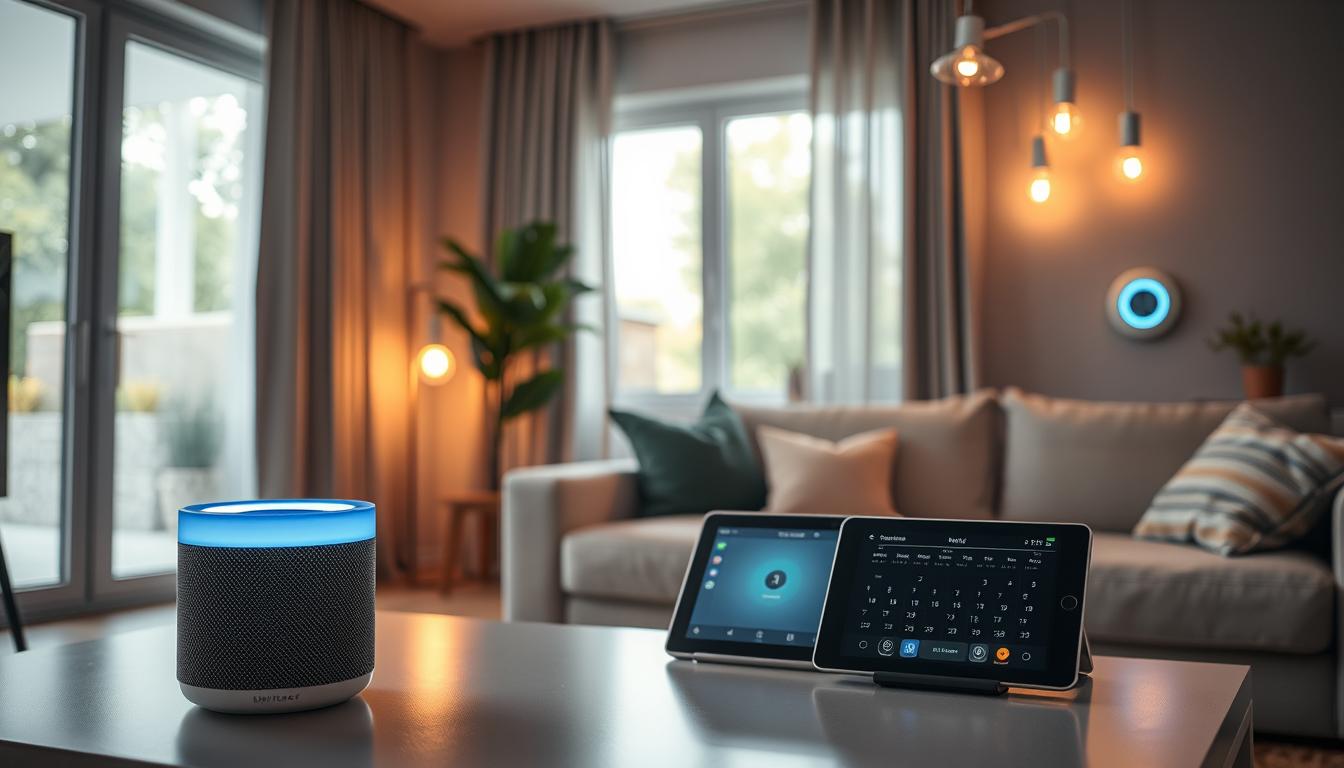
A smart speaker — the Amazon Echo or Google Nest — is among the highest-value technology investments available to older adults living independently. It sits in a common area of your home and responds to voice commands without requiring you to pick up a phone, find your glasses, or navigate a screen.
The practical daily uses are extensive. You can ask it the time, the weather, or a question about a medication. You can set a timer while cooking without touching anything. You can add items to a shopping list as you think of them. You can make hands-free phone calls to family members by name. You can ask it to play music, news, or an audiobook. If you use smart plugs (see below), you can turn lights and appliances on and off by voice from anywhere in the room.
The Amazon Echo Dot (the smaller, less expensive version) costs around $30 to $50 and is adequate for most of these purposes. The Echo Show adds a screen, which makes video calls with family possible without a separate phone or tablet. Setup requires Wi-Fi and about 15 minutes — something a family member can do during a visit that will then function independently for years.
Smart Home Basics: Three Additions Worth Considering
Smart home technology ranges from simple and genuinely useful to complex and unnecessary. For older adults focused on independence rather than novelty, three additions stand out as practical and low-maintenance.
Smart plugs for lamps and appliances. A smart plug (TP-Link Kasa Smart Plug and the Amazon Smart Plug are both reliable and cost $10 to $25) turns any existing lamp or appliance into something you can control by voice or phone app. The most common use is bedside lamps — turning them off after getting into bed without having to get up again, or turning them on in the night without reaching for a switch. For anyone who finds unnecessary movement painful or risky, this small change reduces daily physical effort noticeably. No special wiring or installation required — it plugs into any standard outlet.
A video doorbell. The Ring Video Doorbell (basic model around $60 to $100) lets you see who is at your door on your phone and speak to them through the phone, without going to the door. This is useful for older adults who move slowly and sometimes miss callers, and it adds a layer of security by allowing you to verify who is at the door before opening it. It also records visitor footage, which can be useful if you receive suspicious visitors. Installation requires screwing the doorbell in place and connecting it to Wi-Fi — a straightforward job for a family member during a visit.
A medical alert system. For older adults living alone, a personal emergency response system — a wearable button that connects to emergency services when pressed — provides genuine peace of mind for both the user and their family. Medical Guardian, Life Alert, and Bay Alarm Medical are among the most established services, with monthly fees typically ranging from $20 to $45. Some options are entirely phone-based (no separate device required), while others involve a dedicated wearable button. Apple Watch provides similar functionality for those who already own one, with automatic fall detection and SOS calling built in.
Grocery and Errand Services: Handling Tasks That Have Become Difficult
Physical errands — grocery shopping, pharmacy pickup, banking — become genuinely difficult for many older adults due to transportation, mobility, or fatigue. Technology-based services handle these without requiring you to rely on a family member each time.
Grocery delivery and pickup. Instacart, Amazon Fresh, and most major grocery chain apps (Kroger, Walmart, Publix, Safeway) offer home delivery or curbside pickup. You order from your phone or computer, choose delivery or pickup, and your groceries arrive. For many older adults, this removes the most physically demanding regular errand from their week. Delivery fees range from $5 to $10 per order, or annual memberships reduce the per-order cost significantly.
Prescription delivery. CVS, Walgreens, and Rite Aid all offer home delivery for prescriptions, often free of charge. Amazon Pharmacy frequently offers lower prices than traditional pharmacies and delivers to your door with free two-day shipping for Prime members. Setting up automatic refills ensures you never run out of a regular medication without needing to remember to call in a refill.
The goal of each of these tools is the same: to reduce the number of tasks that require physical effort, caregiver help, or family assistance, so that your daily routine remains manageable and under your control. Starting with one — the medication app, the smart speaker, or the grocery delivery service — and using it consistently for a few weeks is the most reliable path to building the kind of technological independence that genuinely supports daily life.

Dan Alex is the founder and lead writer at Apps for Download, focused on translating digital literacy and accessibility topics into clear, jargon-free guidance for older adults and their families. Every guide is researched against reputable sources on digital safety and assistive technology rather than presented as personal expertise alone.